
- Why Surf Forecasting Matters in Morocco
- Understanding Swell: Height, Period & Direction
- How to Read a Swell Chart for the Moroccan Coast
- Wind: The Make-or-Break Factor
- Tides: When to Paddle Out
- Seasonal Swell Patterns in Morocco
- Best Surf Forecast Apps & Websites
- Spot-by-Spot Forecast Guide
- Putting It All Together: A Sample Forecast
- Common Forecasting Mistakes
- How to Check the Forecast During Your Day
- Surf Trip Forecast Checklist
- Frequently Asked Questions
Why Surf Forecasting Matters in Morocco
Morocco sits at the receiving end of the entire North Atlantic Ocean. There is nothing between Newfoundland and Taghazout but 5,000 kilometres of open water, which means the swell that reaches this coast is pure, powerful, and — crucially — predictable. Unlike surfing destinations with complex island chains or fickle local wind patterns, Morocco's surf follows a set of rules that, once understood, make it one of the most forecastable destinations on the planet.
If you learn to read a surf forecast for this coastline, you will know whether Anchor Point will be firing before you even leave your riad. You will know whether to head to Imsouane for mellow longboard waves or to Tamraght for punchy beach breaks. You will know whether to surf at dawn or wait for the afternoon tide push. And most importantly, you will save yourself the frustration of driving 45 minutes to a spot only to find it flat or blown out.
In this guide, our team of Moroccan surf guides shares exactly how we read forecasts every morning — the same process we use to decide which break to take our guests to, and the same logic that helps us score the best waves in the country.
Morocco's Atlantic coastline receives more consistent swell days per year (250+) than almost any other surf destination in Europe or Africa. The combination of exposed geography and reliable North Atlantic storm generation means you are almost never truly skunked — even in summer, head-high days occur regularly.
Understanding Swell: Height, Period & Direction
Every surf forecast is built on three fundamental variables. Master these three, and you can read any forecast chart in the world.
Swell Height (Wave Height)
Swell height is the vertical distance from the trough to the crest of a wave, measured in open ocean. On most forecast platforms, this is displayed in feet (ft) or metres (m). A 3 ft swell at 14 seconds can produce head-high (4–6 ft) faces at exposed breaks in Morocco. A 6 ft swell at 14 seconds produces overhead to double-overhead waves. The rule of thumb: multiply the swell height by 1.5 to 2 to estimate face height at Moroccan point breaks.
Swell Period
The swell period — the time in seconds between consecutive wave crests passing a fixed point — is arguably more important than swell height. Think of it as the quality and power indicator:
| Period Range | Type | Quality in Morocco |
|---|---|---|
| Under 8s | Windswell | Choppy, weak, short rides. Rarely worth paddling out. |
| 8–10s | Short-period groundswell | Fun at beach breaks. Too weak for point breaks. |
| 10–12s | Moderate groundswell | Good at most breaks. Anchor Point starts to come alive. |
| 12–16s | Long-period groundswell | Ideal for Morocco. Powerful, organised, excellent shape. |
| 16–20s+ | Very long-period groundswell | Massive power. Point breaks fire; beach breaks close out. |
At 12–16 seconds, waves in Morocco travel at roughly 30–40 km/h in open water and pile up beautifully on the reefs and sandbars. At periods below 8 seconds, you are looking at local wind chop — fine for messing around on a foamie but not for serious surfing.
Swell Direction
Swell direction is measured in degrees (0°–360°) and indicates where the swell is coming from. In Morocco, the ideal swell direction depends on your chosen break:
- NW 300°–320°: The sweet spot. Wraps perfectly into Taghazout bay and lights up every point break from Anchor Point to Killer Point.
- WNW 290°–300°: Still good. Slightly more westerly angle, works well at beach breaks and most points.
- N 340°–360°: Passes straight by the main points but works well at northern-facing spots and Imsouane.
- W 270°: Too straight. Tends to close out across the entire bay. Beach breaks become walls of whitewater.
When a NW swell hits the Moroccan coast, it refracts (bends) around headlands and points before breaking. This means the same swell can produce different wave shapes at Hash Point, Anchor Point, and Killer Point — even though they are within 2 km of each other. Always check the exact swell angle against a spot map; 5°–10° can make the difference between pumping and average.
How to Read a Swell Chart for the Moroccan Coast
Most forecast platforms display swell data in two formats: map view (colour-coded waves animated over the ocean) and spot-specific tables (rows of data for a single location). Knowing how to interpret both is essential.
Map View: The Big Picture
On Windy or Surfline's map view, look at the North Atlantic. You want to see a large area of purple, red, or orange — these colours represent significant wave height. Next, note the arrows. On Windy, swell arrows show direction of travel. You want to see arrows pointing from the northwest towards the Moroccan coast. If the arrows are pointing south, the swell is bypassing Morocco. If they point from the west, expect closing-out conditions.
Spot-Specific View: The Detail
For a specific spot like Anchor Point, look for a table or graph showing: wave height over the next few days, swell period, swell direction, and — crucially — wind speed and direction. Most platforms let you toggle between "swell" and "wind" layers. Always check both. A perfect 6 ft NW swell at 14 seconds is useless if a 25-knot onshore wind is turning it to soup.

Don't rely on a single forecast model. The Moroccan coast can trick even the best algorithms. Cross-check GFS wind data (on Windy) with WaveWatch III swell data (on Surfline). If both models agree, you can be confident. If they diverge, err on the side of caution and check the beach in person before committing.
Wind: The Make-or-Break Factor
Wind is the single most misunderstood variable in Moroccan surf forecasting. Here is the only rule you need to remember: offshore wind grooms the waves into perfection; onshore wind destroys them.
Offshore vs. Onshore in Morocco
- Offshore (E/SE): Blowing from the land towards the sea. Holds the wave face open, creates glassy conditions, and allows the swell to stand up before breaking. In Taghazout and Tamraght, offshore wind comes from the east or southeast — the direction of the desert and the Atlas Mountains.
- Onshore (NW/W): Blowing from the sea onto the land. Makes the wave face crumble, creates chop, and pushes the swell down. This is the prevailing afternoon wind that kicks in around 11 AM–2 PM.
- Cross-shore (N or S): Blowing along the coast. Adds texture and bump to the face. Generally surfable but messy.
Wind Speed: The Goldilocks Zone
Light winds (0–8 knots) are ideal, regardless of direction — even a light onshore won't ruin a good swell. Moderate winds (8–15 knots) are surfable but you need offshore direction. Strong winds (15+ knots) — if offshore, expect difficult paddling and spray-back; if onshore, do not paddle out unless you enjoy getting slapped in the face by whitewater.
The famous "morning glass-off" in Morocco — that period of dead-calm, perfect waves at sunrise — happens because the land cools overnight, killing the sea breeze. This window typically lasts from dawn until about 10 AM. Our guides wake up at 6 AM specifically to check if the glass-off window is on. When it is, the first two hours of daylight are often the best surf of the entire day.
Tides: When to Paddle Out
Tides along the Moroccan Atlantic coast are semi-diurnal — two high tides and two low tides every 24 hours and 50 minutes. The tidal range varies from about 1.5 metres during neap tides to 3.5 metres during spring tides. This matters enormously for wave quality.
| Spot Type | Best Tide | Why |
|---|---|---|
| Point breaks (Anchor Point, Killer Point) | Mid-tide, preferably rising | Low tide exposes dangerous reef; high tide swamps the take-off. Mid-tide gives the ideal water depth over the reef shelf. |
| Beach breaks (Panoramas, Banana Beach) | Mid to low tide | Low tide creates steeper, hollower waves. High tide makes them softer and more beginner-friendly. |
| Imsouane (The Bay) | All tides, but mid preferred | The long sand-bottomed bay works on most tides, but the wave is longest and cleanest at mid-tide. |
| Imsouane (Cathedral) | Mid to high tide | Needs water over the rock shelf. Low tide is dangerously shallow here. |
Seasonal Swell Patterns in Morocco
Morocco's surf seasons are driven by the North Atlantic storm cycle. Understanding this annual rhythm is the key to planning your trip:
- October–November: The season wakes up. The first large groundswells from North Atlantic storms reach Morocco. Water is still warm (19–21°C), wind is often cooperative. An excellent window for intermediates who want size without the full winter fury.
- December–February: Peak season. The North Atlantic is at its most active. Expect 6–10 ft+ swells at 12–16 seconds, multiple times per month. The wind is predominantly offshore in the mornings. Water drops to 16–17°C. This is when Anchor Point produces its most famous waves. Crowds are at their maximum.
- March–April: The shoulder. Swells remain consistent but average size drops slightly (4–6 ft). Weather is glorious — sunny, 22–28°C. Water begins warming. Many local guides consider March the single best month: world-class waves, fewer crowds, perfect weather.
- May–September: Summer season. The North Atlantic calms. Large groundswells become less frequent but still arrive every 7–14 days. Typical summer day: 2–4 ft at 8–12 seconds. Perfect for beginners and intermediates, or experienced surfers who want empty lineups and warm water.

Best Surf Forecast Apps & Websites
After years of daily use, here is our honest assessment of the best forecast tools for Morocco:
| App / Website | Best For | Cost | Rating |
|---|---|---|---|
| Windy | Wind and swell map visualisation — the best tool for understanding the big picture. Animated wind layers are superb. | Free (premium available) | 9/10 |
| Surfline | Spot-specific forecasts, live cameras at some Moroccan breaks, detailed swell tables. | Premium ($95/yr) — free limited version | 8/10 |
| Windguru | Highly accurate wind forecasts. The preferred tool of most local Moroccan surf guides and kite surfers. | Free (premium available) | 8/10 |
| Magicseaweed (Surfline) | Historical swell data and detailed spot pages. Now merged with Surfline. | Free (limited) | 7/10 |
| Surf-Forecast.com | Simple, reliable spot forecasts. No app, but the website is mobile-friendly and loads fast on slow Moroccan connections. | Free | 7/10 |
Spot-by-Spot Forecast Guide
Each break on the Moroccan coast responds differently to the same forecast. Here is what to look for:
- Anchor Point: Needs NW swell (300°–320°) of at least 3 ft at 10+ seconds. Works best on mid-tide rising. Offshore wind (E/SE) is non-negotiable for quality. On a big day (6 ft+), check if Killer Point is the better call — Anchor can max out.
- Killer Point: Works on bigger swells (5 ft+) when Anchor Point is closing out. Longer period swells (14s+) are best. Needs mid to high tide.
- Hash Point: Works on smaller, more manageable swells (2–4 ft at 10–12s). A great option when Anchor is too big. Mid-tide, any wind but onshore.
- Banana Beach (Tamraght): The most consistent beginner-to-intermediate beach break. Works on almost any swell direction from W to NW. Best at 2–5 ft at 8–12s. Mid to low tide creates steeper waves.
- Imsouane (The Bay): Needs a NW or N swell (320°–350°). Works on a wide range of sizes (2–8 ft). The sand-bottomed bay handles most tides. The longer the period, the longer the ride.
Putting It All Together: A Sample Forecast
Let us walk through a real-world forecast reading. Imagine you wake up in Taghazout on a January morning and check Windy:
- Swell: 5 ft at 14 seconds from 310° (NW). Excellent — this is the sweet spot for Anchor Point.
- Wind: 4 knots from the east at 7 AM, building to 18 knots from the northwest by 1 PM. Offshore window until late morning, then onshore.
- Tide: Low tide at 5:30 AM, high tide at 11:45 AM. Rising tide all morning. Perfect.
- Decision: Paddle out at Anchor Point at 7:30 AM. You have a 3–4 hour window of clean, glassy conditions on a rising tide with a perfect NW groundswell. By noon, when the wind swings onshore, move to Panoramas for protected beach break surf. Or have lunch and wait for the evening glass-off.
Common Forecasting Mistakes
- Mistake #1: Only checking swell size. A 10 ft swell at 6 seconds is worse than a 3 ft swell at 14 seconds. Period is king.
- Mistake #2: Ignoring tide charts. The difference between a perfect wave and a dangerous reef is often just one metre of tide height. Always check.
- Mistake #3: Using a single forecast source. Forecasts diverge. Cross-check at least two platforms before committing to a long drive.
- Mistake #4: Forgetting about local topography. Swell wraps, refracts, and shadows behind headlands. A forecast for "Taghazout" does not apply equally to every break in the bay.
- Mistake #5: Not looking at the wind forecast beyond the current reading. A glassy 7 AM can turn into a wind-ravaged mess by 10 AM. Check the hourly wind trend, not just the snapshot.
Never rely solely on a forecast when big swell is running. The Moroccan coast has powerful rips, shifting sandbars, and can change character dramatically from one day to the next. If the forecast predicts 8 ft+ at 14 seconds, even experienced surfers should check conditions from the cliff top for at least 15 minutes before paddling out — and ideally consult a local guide.
How to Check the Forecast During Your Day
Wake up. Open Windy. Check swell height, period, direction for the day ahead.
Check Windguru for detailed wind forecast — hourly breakdown for the next 12 hours.
Open tide chart. Note times of low and high tide. Is it rising or falling this morning?
Cross-check with Surfline spot forecast for your intended break. Do the models agree?
Step outside. Feel the wind. Look at the sky. Does reality match the forecast? Trust your eyes.
Arrive at the spot. Watch at least two full sets (10–15 minutes). Confirm wave size and shape.
Midday check: has the wind swung? Re-evaluate conditions for the afternoon session.
Evening check: look at tomorrow's forecast. Plan which spot and what time to surf.
Surf Trip Forecast Checklist
- Download Windy, Surfline, and Windguru apps before your trip (Moroccan SIM data can be slow)
- Save your local tide chart (bookmark tide-forecast.com for Agadir)
- Learn to read swell direction in degrees — understand what 300° vs 270° means for your break
- Always check wind direction AND speed, not just swell. Wind kills waves faster than anything.
- Cross-check at least 2 forecast sources before driving to a distant break
- Learn the ideal conditions for your chosen surf spot before arriving in Morocco
- Watch the ocean from the cliff for at least 10 minutes before paddling out
- Book a surf guide for your first few sessions — they read the coast better than any app
- Keep a surf journal: note date, swell, wind, tide, and wave quality. Patterns reveal themselves over time.
- If the forecast looks marginal, ask your surf camp guide. They know which spots work in which conditions.
Frequently Asked Questions
Ready to Put Your Forecast Skills to Use?
Book a guided surf trip in Morocco and let our local team show you how to read the coast like a pro. From €550 for 8 days including accommodation, meals, and daily transport.
Last content review: July 2026. This article is periodically reviewed by our team of Moroccan surf guides.
Information that may change over time: Forecast app features, pricing, and availability may change. Swell models are continuously updated — current accuracy information is as of 2026. Tide data for specific locations should always be verified against local tide tables. App ratings are based on our team's day-to-day usage of the free tiers on the Moroccan coast.
We recommend: Always cross-check multiple forecast sources. Use real-time observation to confirm model predictions. Consult a local guide for spot-specific interpretation of forecast data.
Related Articles
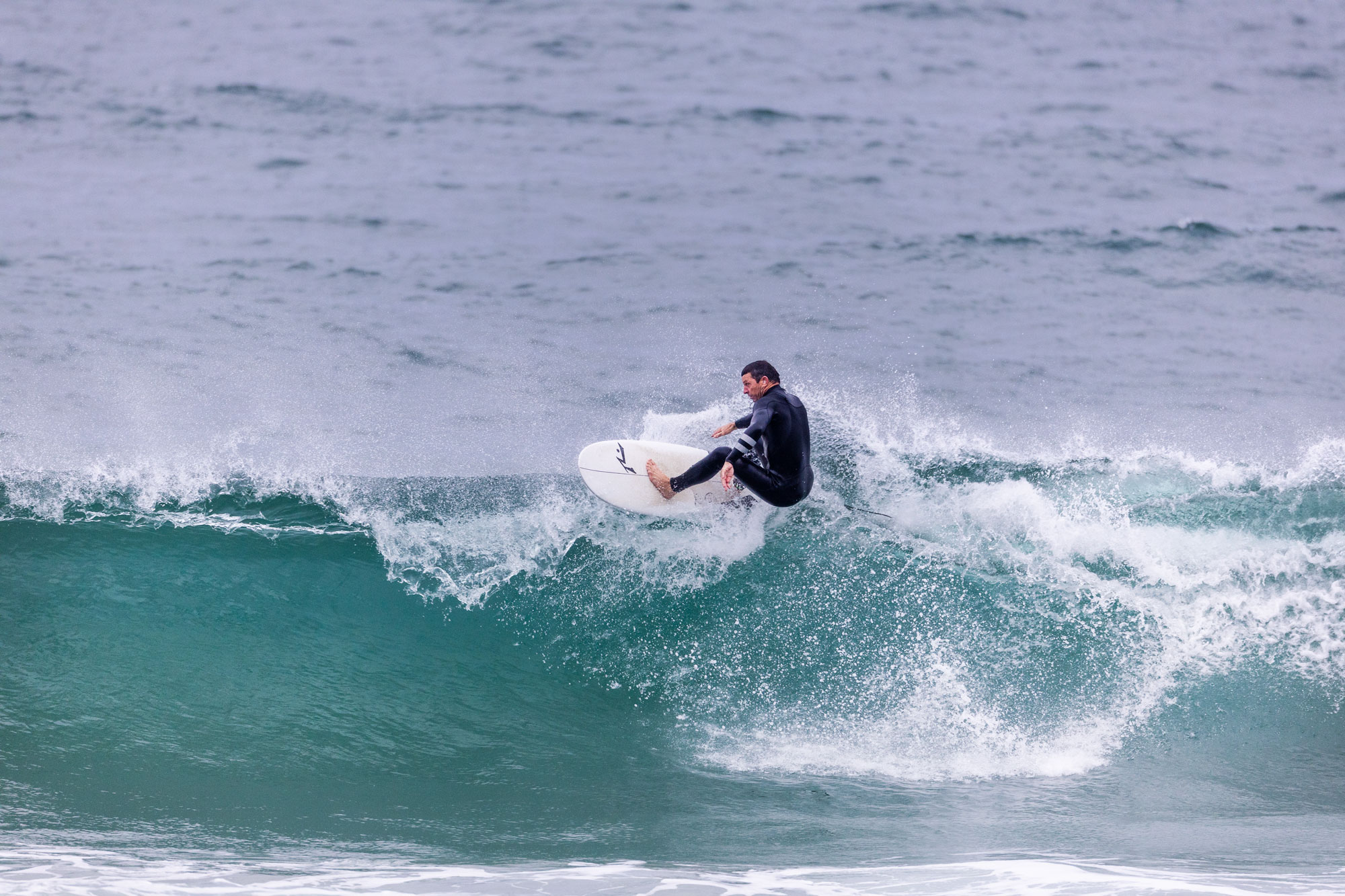
Morocco Surf Etiquette — How to Respect the Lineup
Local rules, lineup priority, and how to earn respect from Moroccan surfers.
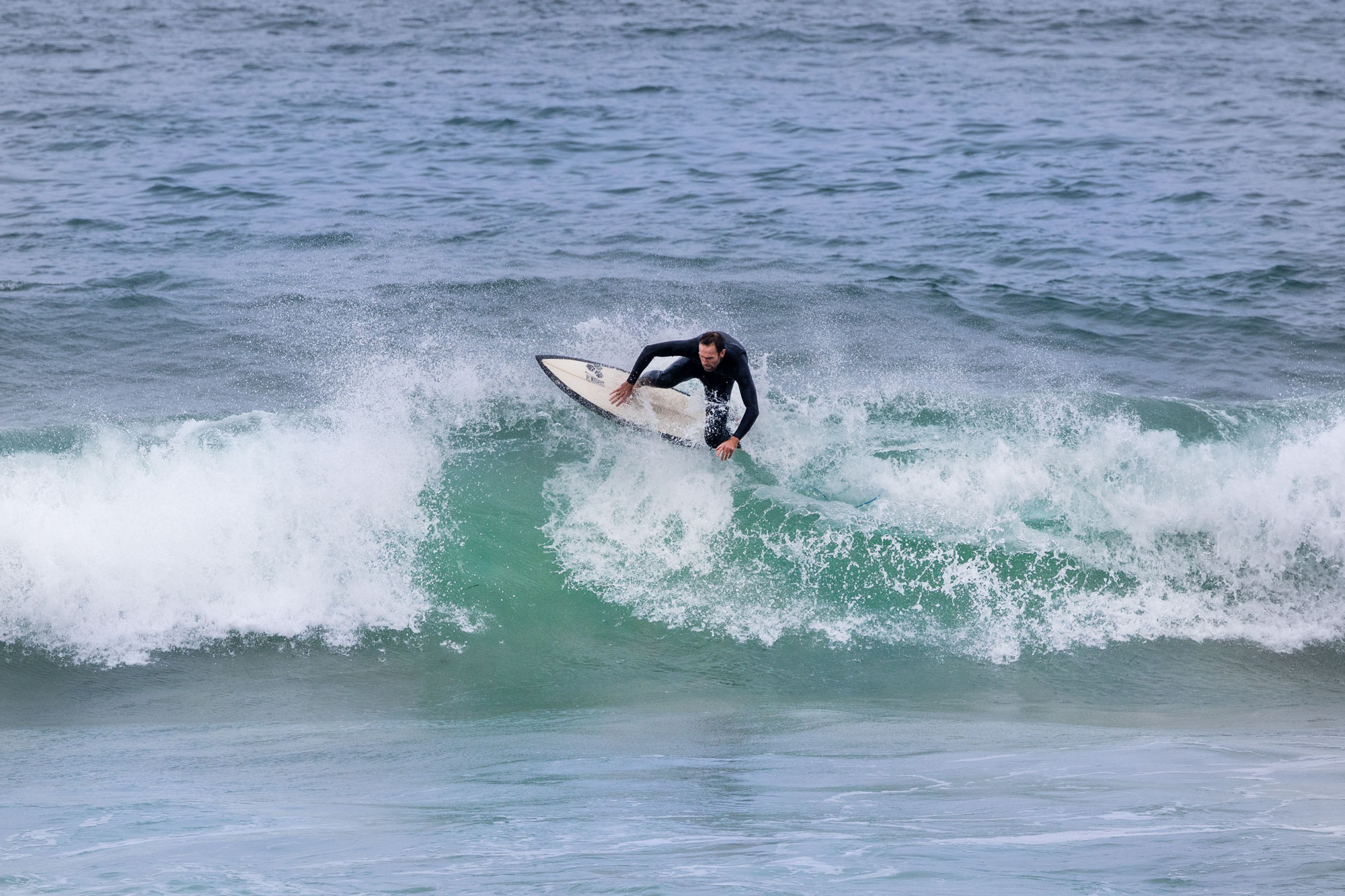
Weather & Swell — Best Seasons
Month-by-month breakdown of swell, wind, and temperature on the Moroccan coast.
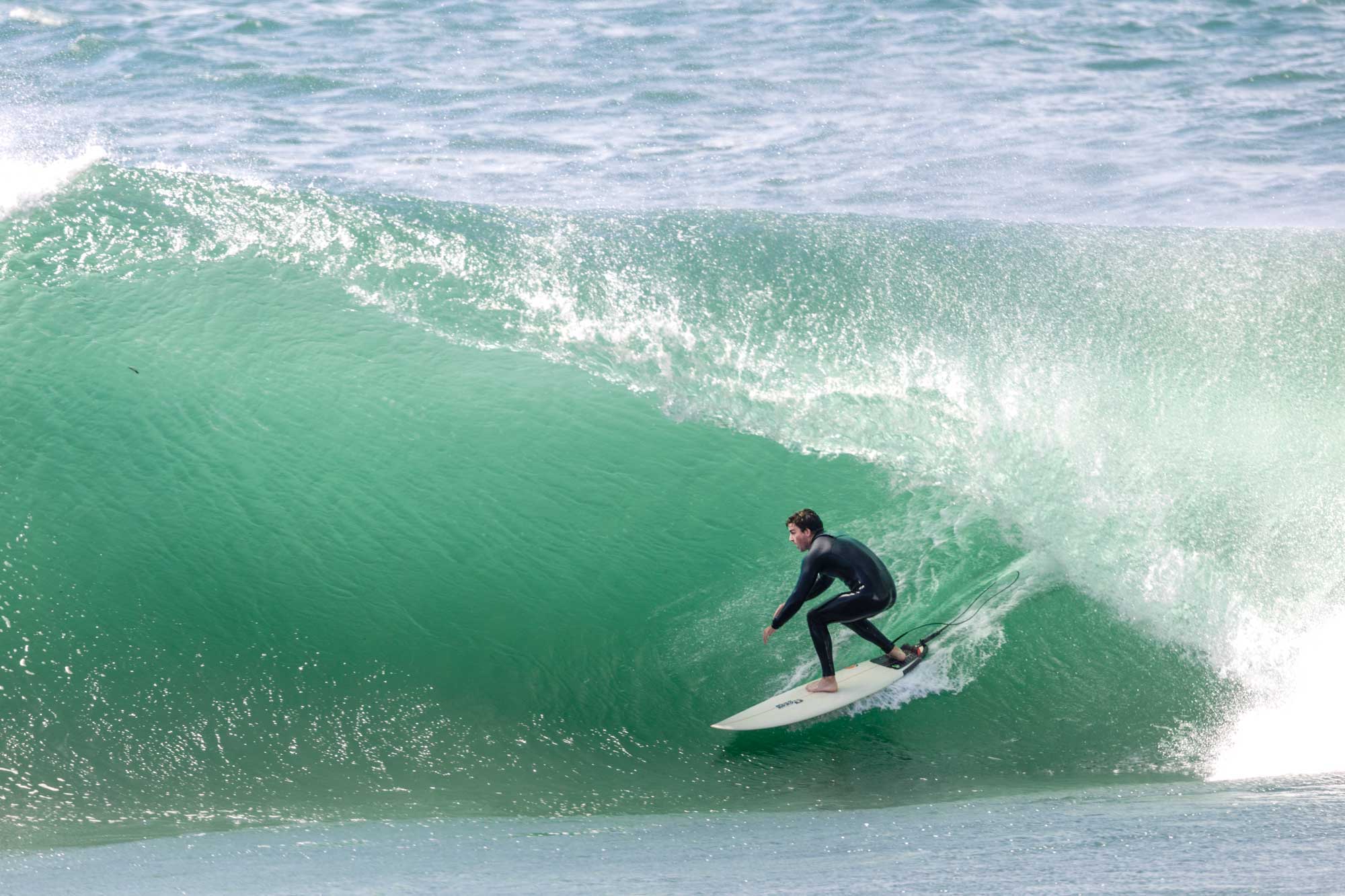
Surf Guides — How to Surf Morocco
Our complete collection of surf guides covering every aspect of surfing in Morocco.